
Restorative Dentistry
A Stronger Fix for a Cracked, Worn, or Heavily Filled Tooth
A lab-made crown can protect a tooth when a filling is no longer enough. Elm Ridge plans crowns around strength, fit, bite, and a natural appearance.
Quick Take
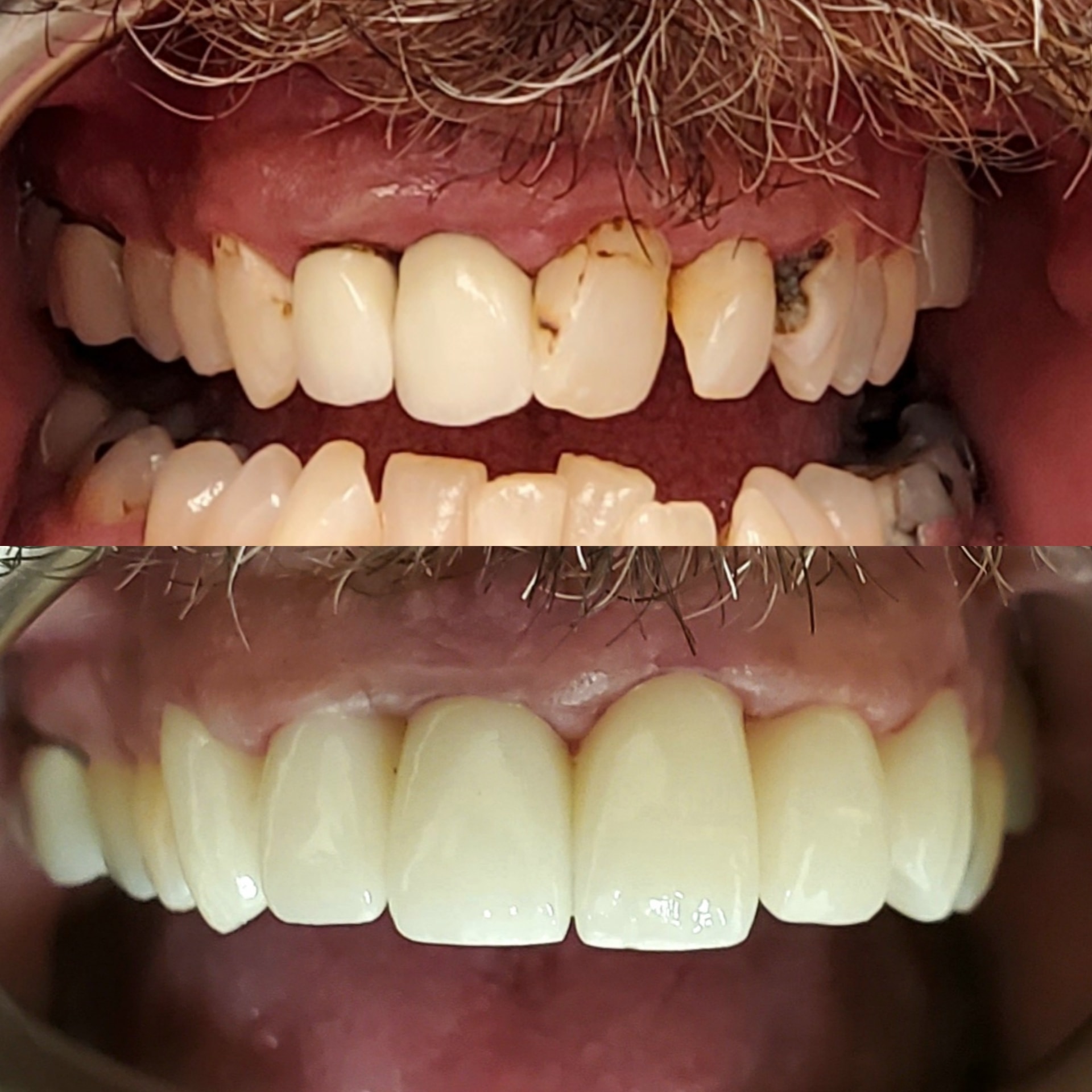
Elm Ridge provides lab-made crowns only. A crown may protect a cracked, heavily filled, root-canal-treated, or worn tooth while being shaped and shaded to blend naturally.
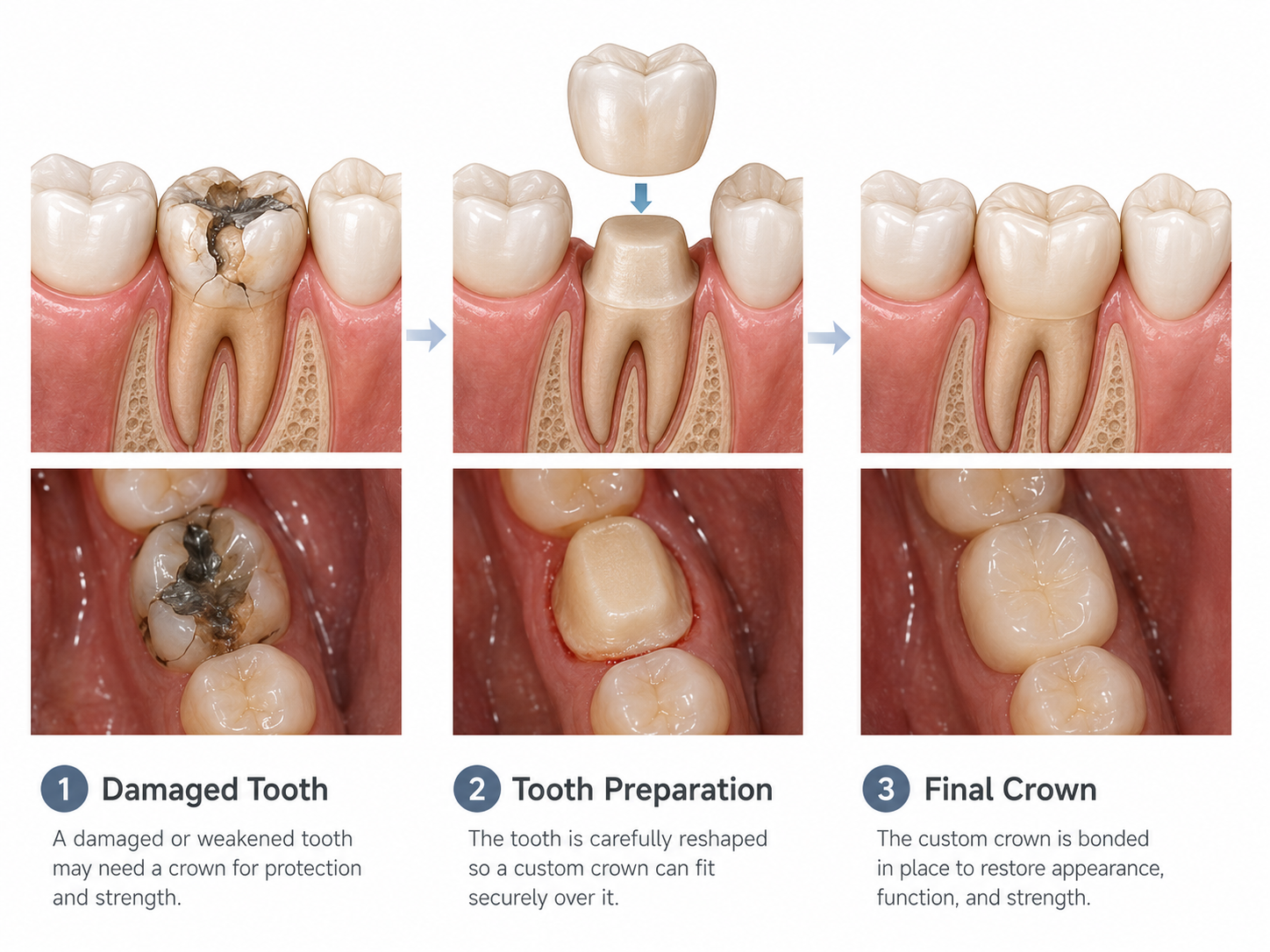
At a Glance
Typical range
$900-$1,600 per tooth
Core buildup
$250-$500 when needed
Workflow
Lab-made crown; no same-day crowns
Timing
Preparation, temporary crown, final cement about 2 weeks later
Who It Helps
Crowns can help cracked teeth, heavily filled teeth, worn teeth, teeth after root canal treatment, and teeth that need stronger protection than a filling can provide.
How Elm Ridge Approaches It
Elm Ridge uses lab-made crowns only. Most crown workflows use intraoral scanning when appropriate, and material selection depends on bite, tooth location, strength needs, esthetics, and the clinical situation.
When a crown makes sense
- A large old filling has weakened the tooth.
- A crack or fracture needs protection.
- A back tooth has had root canal treatment.
- Wear or bite forces have compromised the tooth.
- A lab-made restoration is needed for strength and fit.
When something else may be better
- A small cavity may only need a tooth-colored filling.
- A front tooth cosmetic concern may be better handled with bonding or a veneer.
- A tooth split below the gumline may need extraction and replacement rather than a crown.
Materials and technology
Common materials include modern porcelain options such as zirconia and e.max/lithium disilicate. Gold may be used when requested or necessary, and PFM may be used when necessary. Elm Ridge uses intraoral scanning for about 90% of applications, while choosing traditional impressions when they produce a better result.
What happens if a crown is delayed
A weakened tooth can crack farther, lose more structure, or become painful. If the nerve becomes involved, a root canal or extraction may enter the conversation.
Typical cost range
Typical public range: $900-$1,600 per tooth; $250-$500 when needed. A buildup is needed only when there is not enough solid tooth structure to support the crown.
What to Expect
Expect Elm Ridge to explain what is damaged, how much healthy tooth remains, and whether a filling, crown, bridge, root canal, or implant option makes the most sense.
When to Call
Call if a tooth hurts, cracks, feels sharp, loses a filling, changes color, or feels different when you bite.
Insurance and Payment
Typical public ranges are not guarantees. PPO insurance can dramatically change out-of-pocket cost. Medicaid is not accepted. CareCredit and Cherry are available. Payment is due at time of service. Financing may help spread out larger treatment costs. We can estimate benefits, but final payment is determined by the insurance company.
Dentists Who May Help
Related Questions Patients Ask
Root canals
Treat infection or deep decay so a tooth may be saved instead of removed.
Broken tooth
Find out whether a broken tooth needs smoothing, bonding, a filling, a crown, a root canal, or removal.
Crown cost
What affects crown fees, buildup needs, and insurance estimates.
Kayla Muszynski, DDS
Meet one of the dentists who provides family, restorative, and cosmetic care at Elm Ridge.
Related Care
Ready for the next step? Call 254-699-4127 or request an appointment. For urgent dental problems, call instead of using the form.
Common Questions
No. Elm Ridge provides lab-made crowns only.
A typical crown is prepared first, then the final crown is cemented about 2 weeks later.
Yes, in most crown workflows. The temporary protects the tooth while the lab-made crown is being made.
It depends on tooth location, bite, strength needs, esthetics, and clinical situation.
Crowns are strongly recommended for posterior teeth after root canal treatment because back teeth absorb heavier chewing forces and are at higher risk of fracture.
Ready to talk through your options?
Elm Ridge will explain what is happening, what choices are realistic, and what makes sense for your mouth.
Dental Crown Insurance
Learn how deductibles, frequency limits, and replacement rules may affect crown coverage.
Learn About Crown InsuranceTemporary Crown Instructions
If you leave with a temporary crown, these instructions help protect it until your final crown is placed.
View Crown Instructions