
Restorative Dentistry
Root Canal Treatment When a Tooth Can Still Be Saved
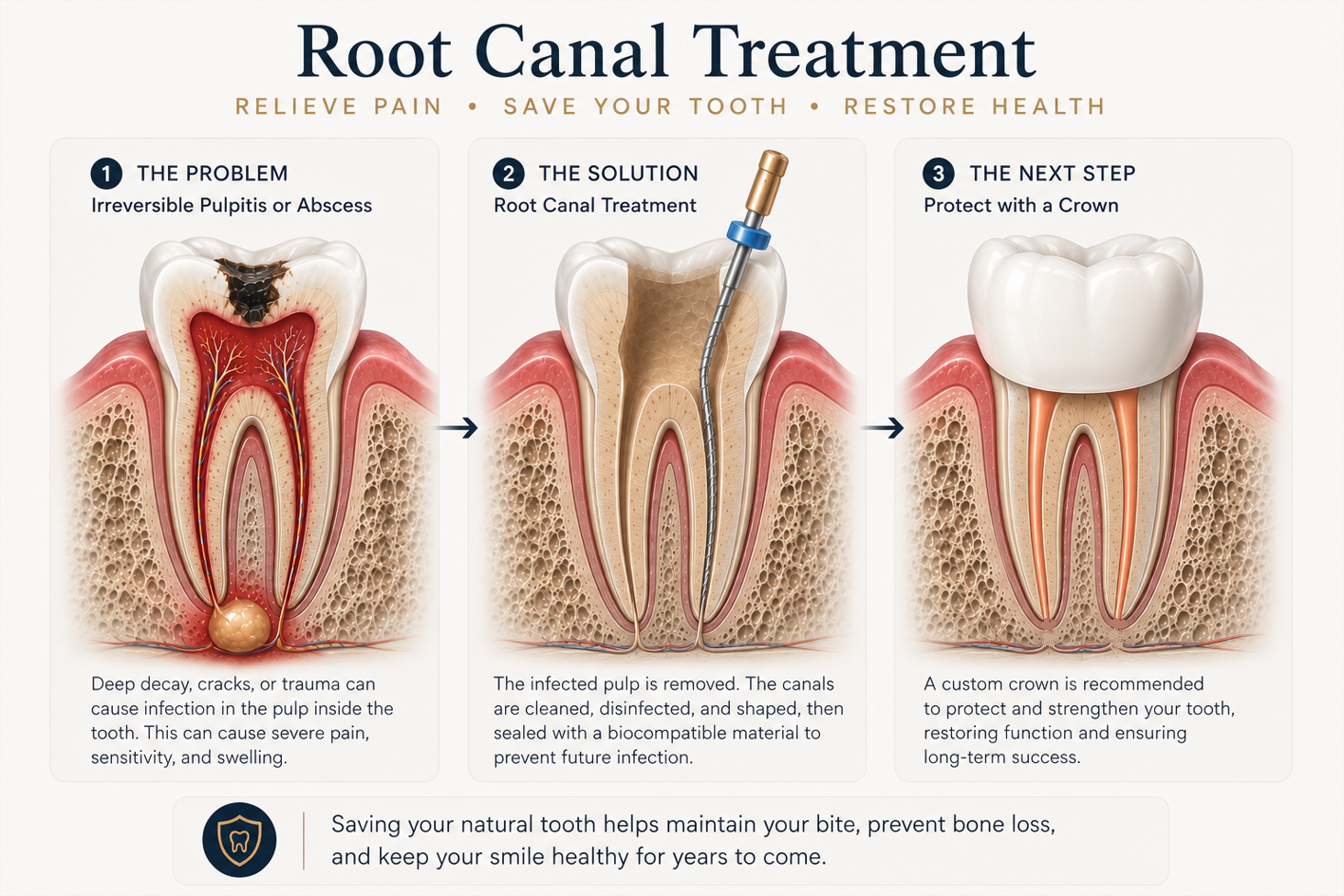
When infection or deep decay reaches the nerve, a root canal may be needed so you can keep the tooth instead of removing it.
Quick Take
When infection or deep decay reaches the nerve, a root canal may be needed so you can keep the tooth instead of removing it.
At a Glance
Typical range
$600-$1,200
Molar root canals
Yes, many cases
Retreatments
Not offered
Technology
CBCT for nearly every case, especially posterior teeth; rotary endodontics
Who It Helps
Root canal treatment may help when tooth pain, deep decay, trauma, swelling, or infection involves the nerve but the tooth is still restorable.
How Elm Ridge Approaches It
Elm Ridge uses CBCT for nearly every root canal case, especially posterior teeth, because missed canals can contribute to failed treatment. Rotary endodontics is used, and same-day start is offered when possible.
Root canal vs extraction
A root canal is meant to save a tooth by cleaning the infected or inflamed nerve space and sealing it. Extraction may be better when the tooth is cracked beyond repair, lacks enough structure for a crown, has severe bone loss, or has a poor long-term outlook.
Why posterior teeth often need crowns
Crowns are strongly recommended for posterior teeth after root canal treatment because back teeth absorb heavier chewing forces and are at higher risk of fracture.
Boundary: retreatments
Elm Ridge performs many root canals, including molars, but does not perform root canal retreatments. If retreatment is needed, the team will explain referral options.
Typical cost range
Typical public range: $600-$1,200. A crown after root canal treatment is a separate restoration and may be recommended for long-term strength.
What to Expect
Expect testing, X-rays, and a discussion of whether the tooth can be saved predictably. Back teeth often need a crown afterward to reduce fracture risk.
When to Call
Call if tooth pain lingers, wakes you up, comes with swelling, or makes biting difficult. Severe swelling or trouble swallowing should be treated as an emergency.
Insurance and Payment
Typical public ranges are not guarantees. PPO insurance can dramatically change out-of-pocket cost. Medicaid is not accepted. CareCredit and Cherry are available. Payment is due at time of service. Financing may help spread out larger treatment costs. We can estimate benefits, but final payment is determined by the insurance company.
Dentists Who May Help
Related Questions Patients Ask
Molar root canals
Why back teeth need careful canal anatomy and crown planning.
Dental crowns
Protect a cracked, worn, or heavily filled tooth when a filling is no longer enough.
Toothache
Identify whether pain is coming from decay, cracks, infection, bite stress, or gum problems.
Root canal cost
How tooth type, complexity, and restoration needs affect the estimate.
Related Care
Ready for the next step? Call 254-699-4127 or request an appointment. For urgent dental problems, call instead of using the form.
Common Questions
Yes. Elm Ridge performs many root canals, including molar root canals.
No. Elm Ridge does not perform root canal retreatments and will explain referral options when retreatment is needed.
Often, especially on posterior teeth. Elm Ridge will explain whether a crown is recommended for your tooth.
Ready to talk through your options?
Elm Ridge will explain what is happening, what choices are realistic, and what makes sense for your mouth.
After Root Canal Therapy
Review what to expect after treatment and how to protect the tooth while it heals.
View Root Canal Instructions