
Need a personalized answer? Schedule a consultation with Elm Ridge Implant and Family Dentistry in Killeen.
If you have been searching for dental implants near me, you are probably looking for more than a list of offices. You want to know who can explain your options clearly, whether implants are realistic for your situation, what treatment may cost, and how the process actually works.
At Elm Ridge Implant and Family Dentistry in Killeen, we talk with patients every week who are comparing implants, bridges, dentures, snap-on dentures, and full-arch implants. Some are missing one tooth. Others have been struggling with loose dentures for years. Many are not sure where to start, and that is normal.
This guide is meant to help you compare your choices in a practical way, without pressure or dental jargon.
What a Dental Implant Actually Replaces
A dental implant is a small post that is placed in the jawbone to act like an artificial tooth root. Once it has healed and stabilized, it can support a crown, bridge, snap-on denture, or a full set of fixed implant teeth.
That root replacement is what makes implants different from traditional dentures or bridges. A denture sits on the gums. A bridge uses neighboring teeth for support. An implant uses the jawbone for support, which can create a more stable foundation for chewing and speaking.
Implants are not a one-size-fits-all treatment. The right plan depends on how many teeth are missing, your bone levels, your health history, your bite, your budget, and your goals. You can start with our overview of dental implant options in Killeen.
What Can Happen If Missing Teeth Are Not Replaced?
Not every missing tooth has to be replaced immediately, and sometimes there are good reasons to wait. But it is helpful to understand what can change over time.
When a tooth is gone, nearby teeth may slowly drift or tilt into the open space. The tooth above or below the gap may over-erupt because it no longer has a biting partner. Bone in the area can also shrink after tooth loss because it is no longer being stimulated by a tooth root.
These changes are usually gradual, but they can make future treatment more complicated. For example, a space that once fit an implant may become too narrow, or bone loss may mean grafting is needed before implant placement. This is not meant to scare you into treatment. It is simply why a consultation can be useful even if you are not ready to move forward right away.
Comparing Your Main Tooth Replacement Options
Dental implant with a crown
For one missing tooth, an implant-supported crown is often a strong option because it does not require reshaping the neighboring teeth. It looks and functions like an individual tooth, although it still needs regular brushing, flossing, and dental checkups.
Dental bridge
A bridge can replace one or more missing teeth by using the teeth on each side for support. It may be a good choice when those neighboring teeth already need crowns. The tradeoff is that healthy tooth structure may need to be altered.
Traditional denture
A traditional denture can replace many or all teeth and is usually more affordable up front than implants. The limitations are stability, chewing strength, sore spots, and the need for periodic adjustments as the jaw changes.
Snap-on dentures
Snap-on dentures attach to dental implants for better retention than a traditional denture. They are still removable, but they tend to feel more secure. For many patients, snap-on dentures are a middle-ground option between conventional dentures and fixed implant teeth.
Full-arch implants or fixed implant teeth
Full-arch implants, sometimes called All-on-4 or implant-supported teeth, can replace an entire upper or lower arch with a prosthesis attached to implants. This can offer more stability than removable dentures. The details matter, though: number of implants, bone quality, materials, maintenance needs, and whether the teeth are removable by you or only by the dental team.
If you are comparing these options, Elm Ridge Implant and Family Dentistry can walk you through the differences with clear explanations and imaging, instead of handing you a treatment plan you do not fully understand.
Why 3D Imaging Matters for Implant Planning
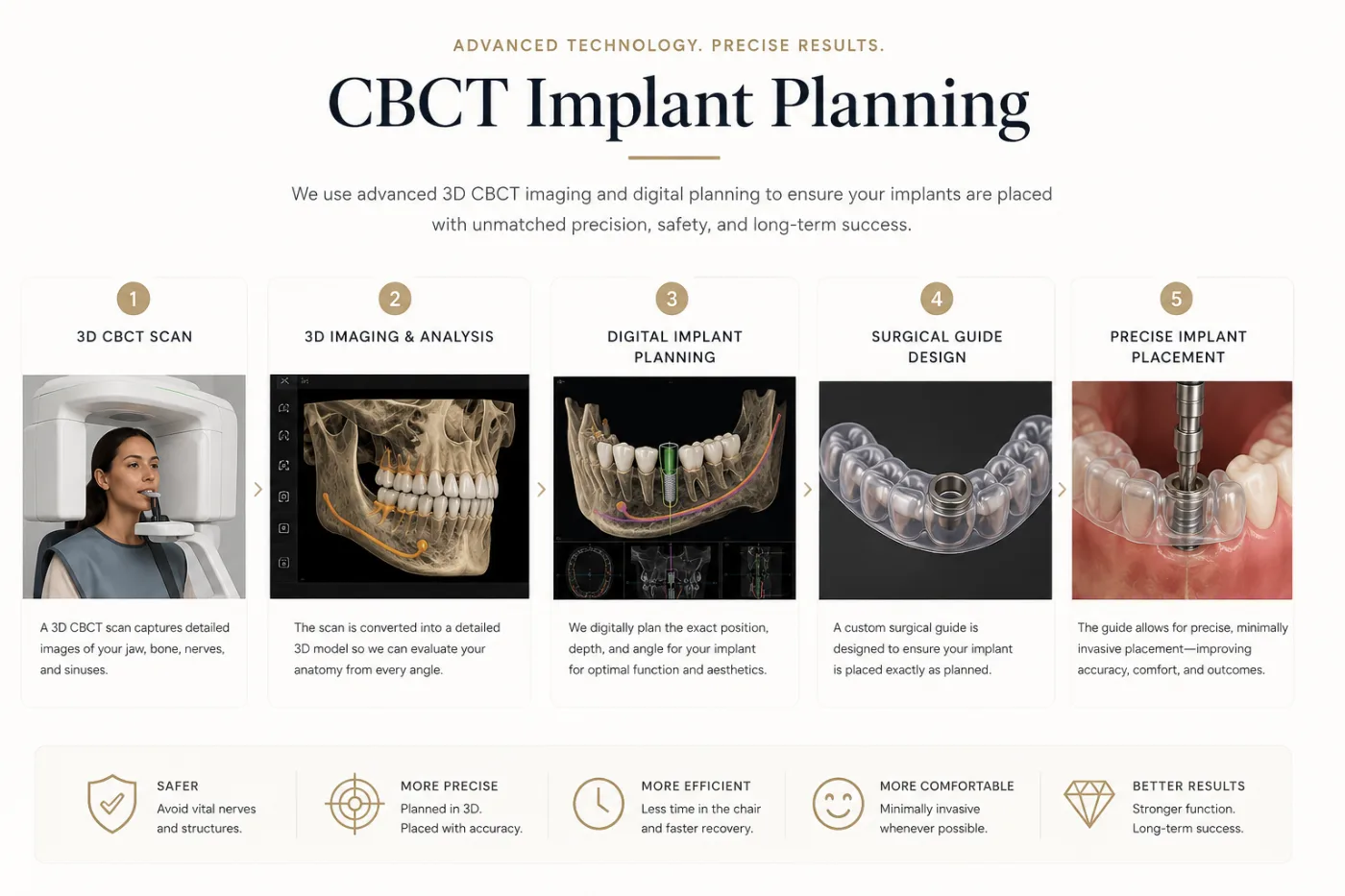
Implant dentistry requires more than looking at a flat X-ray. At Elm Ridge in Killeen, CBCT / 3D imaging may be used when appropriate to evaluate bone shape, bone volume, nerve location, sinus position, and the best implant angle.
This technology helps with planning, but it is not just about having modern equipment. It is about using the information to design a safer, more predictable approach. Patients often appreciate being able to see the images and understand why one option may be recommended over another.
Am I a Candidate for Dental Implants?
Many adults are candidates for implants, but the consultation is where the real answer comes from. Your dentist will consider:
- How many teeth are missing
- How long the teeth have been missing
- Bone levels in the jaw
- Gum health
- Medical conditions such as uncontrolled diabetes
- Smoking or tobacco use
- Medications that may affect healing
- Bite forces, clenching, or grinding
- Your expectations and budget
Some patients are ready for implant placement soon after evaluation. Others may need gum treatment, extractions, bone grafting, or a phased plan. A thoughtful, unrushed visit is especially important if you have been told before that you are not a candidate. Sometimes there are alternatives, and sometimes the most honest answer is to recommend a different solution.
What the Timeline Usually Looks Like
The implant timeline varies, but a typical process may include:
- Consultation and 3D imaging when needed
- Review of options, fees, and financing
- Tooth extraction or bone grafting if needed
- Implant placement
- Healing period while the implant integrates with the bone
- Placement of the final crown, bridge, denture, or full-arch prosthesis
Some patients are able to receive temporary teeth during parts of treatment, especially with full-arch cases, but same-day permanent teeth are not realistic in every situation. Healing biology still matters. A good implant plan balances convenience with long-term function.
What About Cost and Financing?
Implant costs can vary widely because treatment can involve different steps: imaging, extractions, grafting, implant placement, abutments, crowns, dentures, or full-arch prosthetics. A single implant and crown is very different from replacing an entire arch.
When comparing offices, be careful with ads that show one low number without explaining what is included. Ask whether the fee includes the implant, connector, final tooth, imaging, sedation if used, extractions, grafting, follow-up visits, and maintenance.
Elm Ridge Implant and Family Dentistry provides clear explanations so you can understand the plan before making decisions. Financing options may also help patients spread out payments, depending on approval and the treatment selected.
How to Maintain Dental Implants
Dental implants cannot get cavities, but the gum and bone around them still need care. Plaque buildup can lead to inflammation and bone loss around implants, similar to gum disease around natural teeth.
Good implant maintenance usually includes:
- Brushing twice daily
- Cleaning under and around implant teeth as instructed
- Using floss, interdental brushes, or a water flosser when recommended
- Wearing a nightguard if you grind your teeth
- Keeping regular professional cleanings
- Reporting looseness, soreness, or changes in bite early
For snap-on dentures and full-arch implant teeth, maintenance instructions are especially important. Some parts may need periodic replacement, such as attachments or denture components. That is normal and should be discussed before treatment begins.
What Makes Elm Ridge Different for Implant Care in Killeen?
Choosing an implant dentist is partly about training and technology, but it is also about how you are treated during the process. Elm Ridge Implant and Family Dentistry has a private-practice feel, with familiar faces and a team that takes time to explain what is happening and why.
Patients often value the comfort-focused experience, the modern technology used for diagnosis and planning, and the fact that care does not feel rushed. Elm Ridge also has 550+ five-star reviews, which reflects the trust many local patients have placed in the team.
For implant care, experience with both implant placement and restoration matters. The surgical part and the final tooth design have to work together. A well-placed implant still needs a well-designed crown, bridge, denture, or full-arch prosthesis to function properly.
Questions to Ask Before Choosing an Implant Dentist
Before scheduling treatment, consider asking:
- Do you use 3D imaging for implant planning when needed?
- Will you explain all reasonable options, including non-implant choices?
- What is included in the quoted fee?
- How long will treatment take in my case?
- Will I have temporary teeth during healing?
- What maintenance will be required?
- Who will place the implant and who will restore it?
- What happens if I have discomfort or a concern during treatment?
The answers should feel clear, not rushed or vague.
Practical Next Step
If you are comparing tooth replacement options in Killeen, schedule a consultation with Elm Ridge Implant and Family Dentistry. Whether you need one implant, want to stabilize a denture, or are considering fixed implant teeth, the team can help you understand what is possible, what is involved, and what fits your situation.