Lower snap-on denture
Usually more predictable. Two implants can make a major improvement over a loose lower denture; four implants are better when possible.
Dental Implants
Snap-on dentures can be a strong middle-ground option, especially for loose lower dentures. Elm Ridge compares two implants, four implants, and fixed full-arch options honestly.
Quick Take
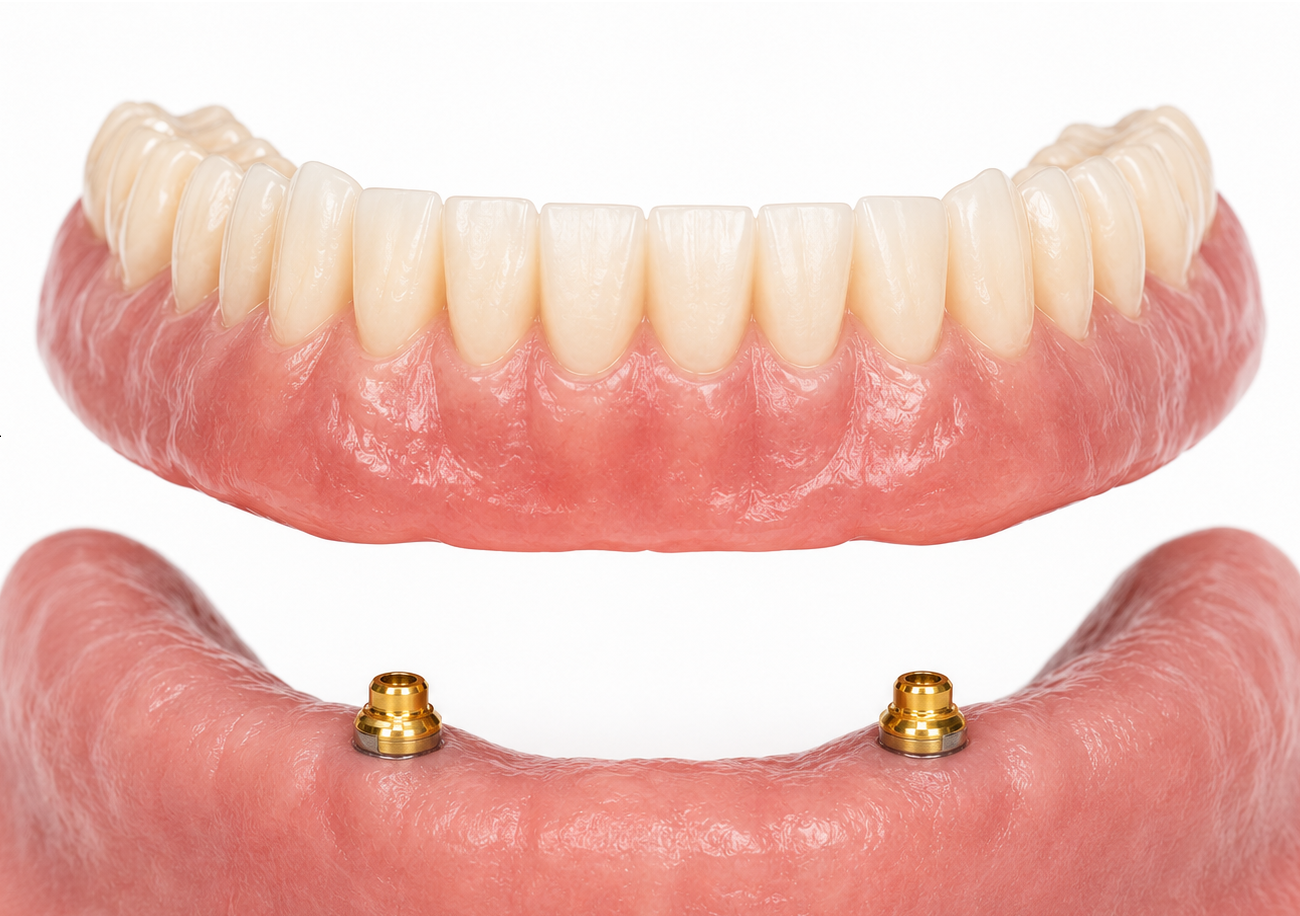
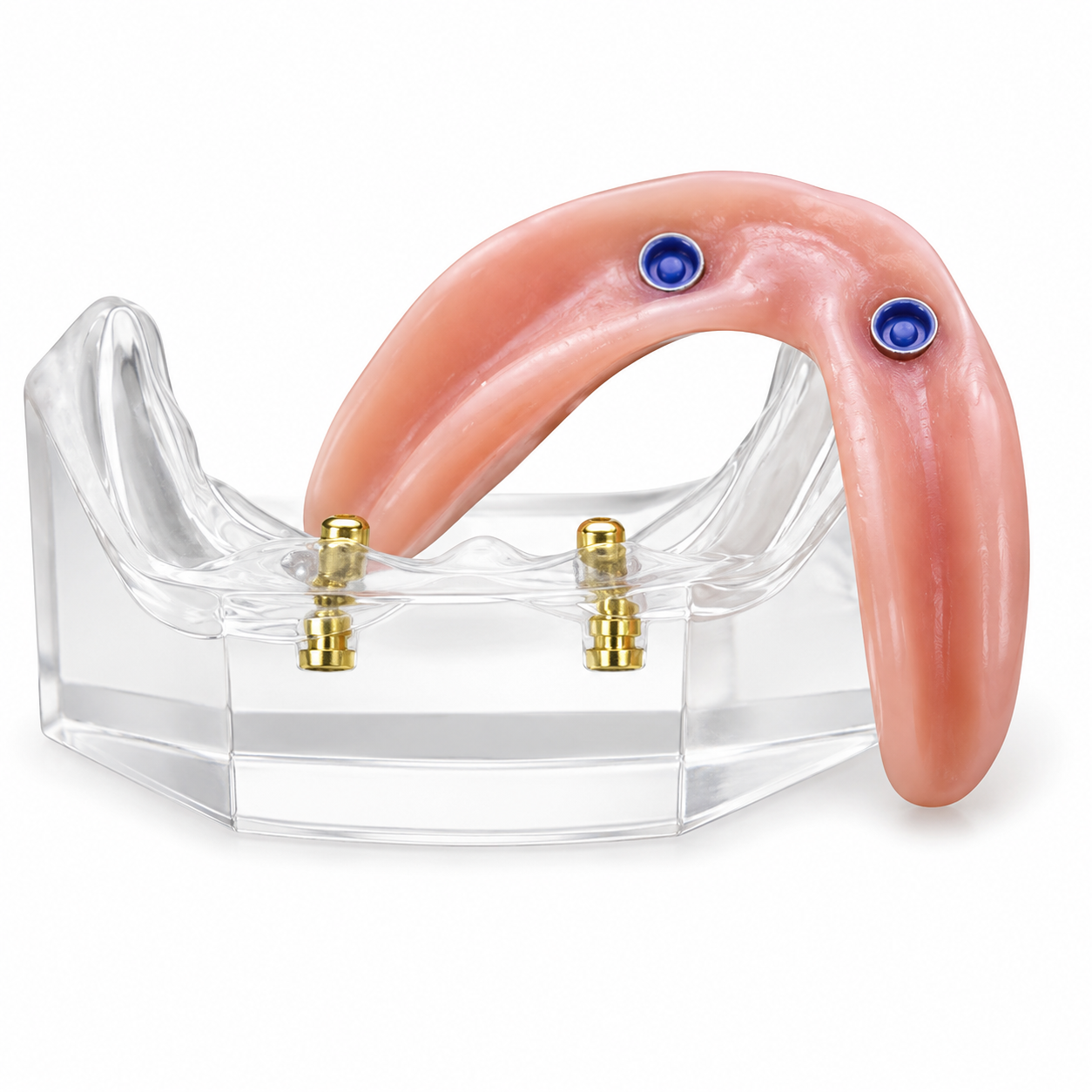
Snap-on dentures attach to dental implants for better retention than a traditional removable denture, allowing you to eliminate the need for denture adhesives and laugh, smile, and eat without worrying about your dentures coming loose.
Typical range
$8,000-$14,000 per arch
Implants
Often 2 or 4; four is better when anatomy and finances allow
Strongest use
usually reserved for the lower arch for best long term success
Provider focus
Jeff Muszynski, DDS
Snap-on dentures can help patients who struggle with a loose lower denture, want a removable option with more retention, or need a middle-ground between traditional dentures and fixed full-arch implants.
Elm Ridge starts with the end result in mind. The implant position, bone, gums, bite, and final tooth design all have to work together before treatment makes sense.
Usually more predictable. Two implants can make a major improvement over a loose lower denture; four implants are better when possible.
More case-dependent. Softer bone, sinus anatomy, implant angulation, and attachment design matter more.
Often better when the patient wants maximum stability and no palatal coverage, but more expensive and more involved.
Upper snap-on dentures can be less predictable than lower snap-ons because the upper jaw often has softer bone, sinus anatomy can limit implant position, and removing the palate means the denture depends more heavily on implant support and attachment design. Upper snap-on dentures can work in selected cases, but they should be planned carefully.
A new denture or retrofitting an existing denture may be possible when appropriate. The existing denture must fit well enough and have enough restorative space for attachments.
Typical public range: $8,000-$14,000 per arch. Cost depends on implant number, whether a new denture is needed, extractions, grafting, attachments, maintenance, and financing choices.
Expect a diagnosis-first visit. Elm Ridge reviews imaging, bone, bite, gum health, medical history, and the final tooth design before recommending the implant path.
Call if you are missing a tooth, have a failing tooth, are tired of loose dentures, or want a second opinion before committing to implant treatment.
Typical public ranges are not guarantees. PPO insurance can dramatically change out-of-pocket cost. Medicaid is not accepted. CareCredit and Cherry are available. Payment is due at time of service. Financing may help spread out larger treatment costs. We can estimate benefits, but final payment is determined by the insurance company.
Dental implants
Replace missing teeth with a long-term fixed option planned around bone, bite, and final tooth design.
Single tooth implant
Replace one missing tooth without using the neighboring teeth for support.
Implant bridge
Replace several missing teeth in a row with a fixed implant-supported option.
Full-arch dental implants
Replace a full upper or lower arch with fixed implant teeth planned around long-term function.
Ready for the next step? Call 254-699-4127 or request an appointment. For urgent dental problems, call instead of using the form.
No. They snap onto implants for retention but are still removed for cleaning.
Two lower implants can be a major improvement. Four implants are better when anatomy and finances allow.
No. Upper cases are more dependent on bone, sinus anatomy, implant angle, palate design, and attachments.
Often when the patient wants maximum stability, no palatal coverage, and a stronger long-term option.
Elm Ridge will explain what is happening, what choices are realistic, and what makes sense for your mouth.
Patient Education
Compare snap-on dentures with traditional dentures and fixed implant teeth before planning treatment.
Implant coverage varies widely. Learn how benefits, exclusions, annual maximums, and financing may apply.
Learn About Implant InsuranceReview implant surgery and denture healing instructions before or after your appointment.