Full-Arch Dental Implants

Full-Arch Dental Implants

When you've lost most or all of the teeth in an arch, the question isn't whether to replace them — it's how well. Full-arch dental implants restore an entire upper or lower set of teeth on as few as four implants, with a fixed bridge that doesn't come out. They look, feel, and function like real teeth. Dr. Jeff Muszynski places and restores full-arch implant solutions at Elm Ridge in Killeen, with every case planned in 3D using CBCT imaging.

What Full-Arch Dental Implants Are

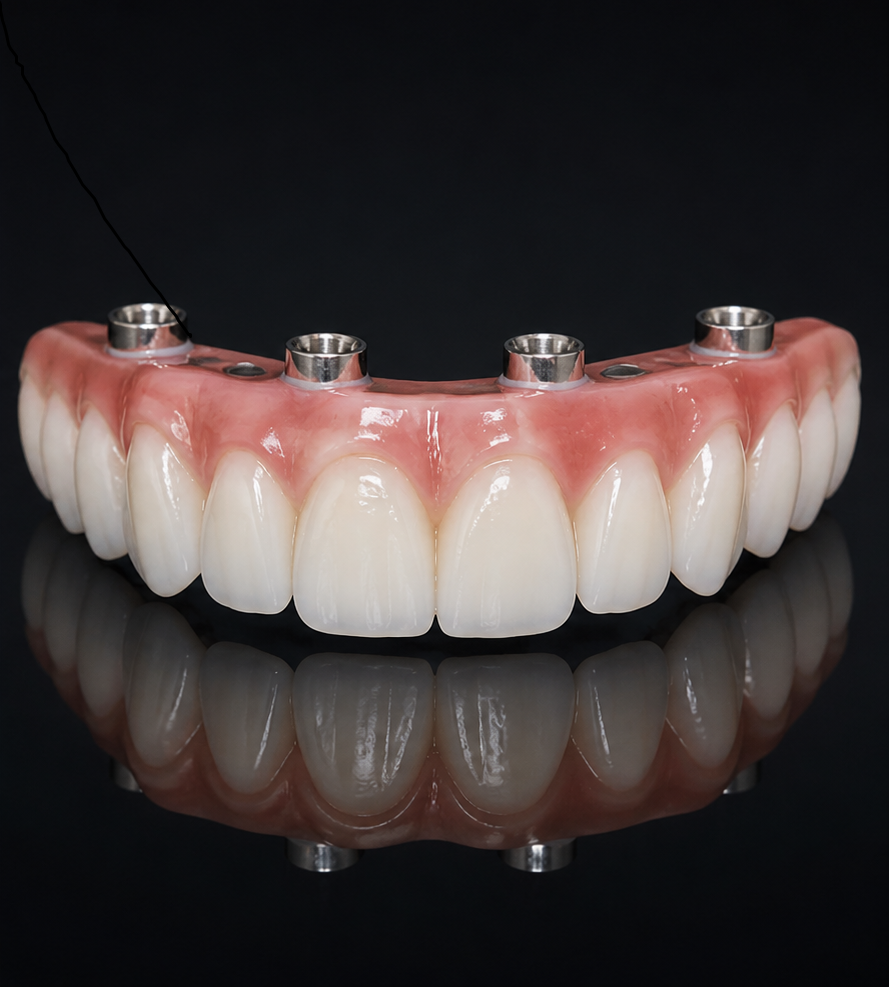
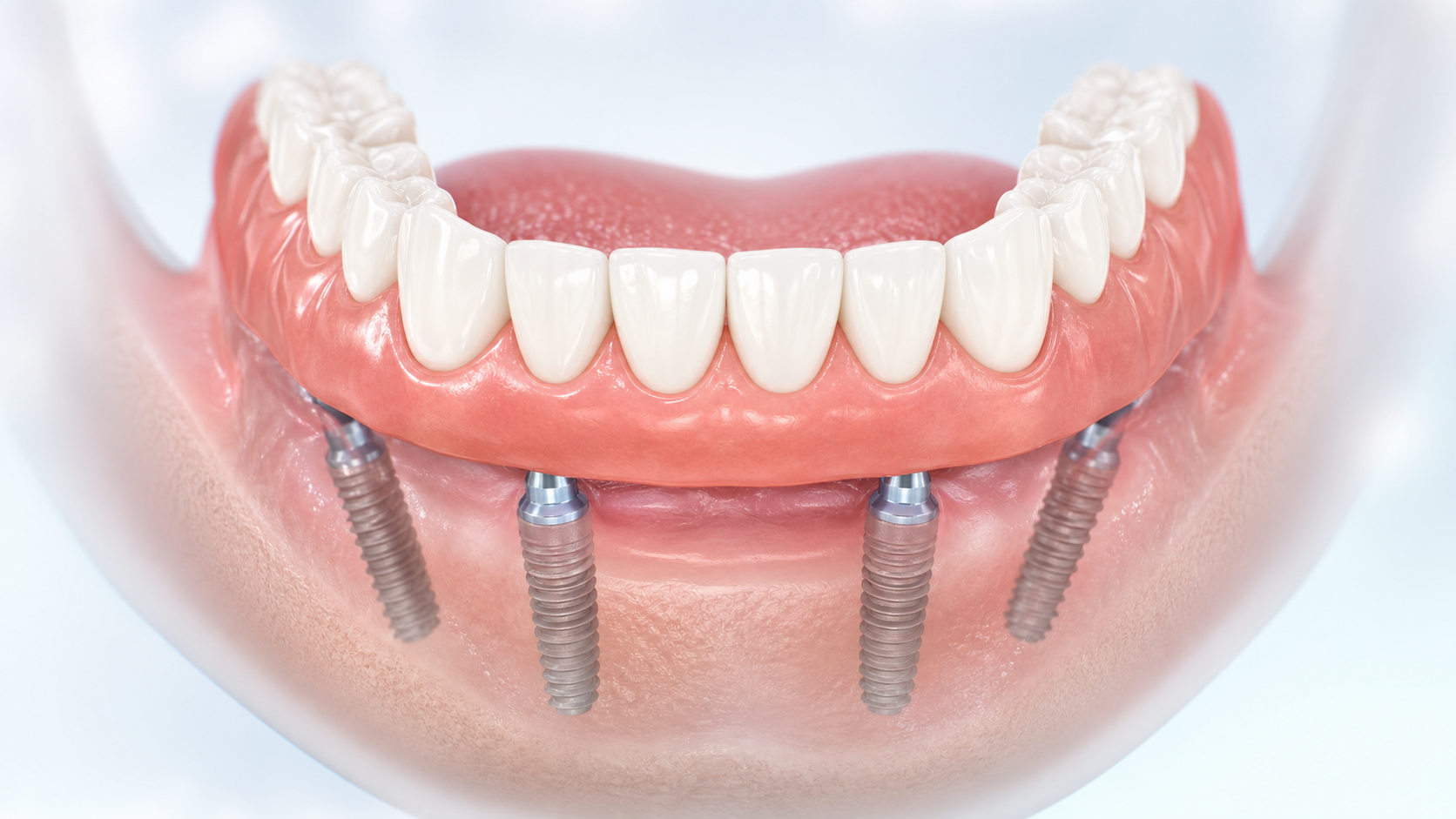
A full-arch implant restoration replaces an entire upper or lower set of teeth using a small number of implants — typically four to six per arch — that support a single fixed bridge. The bridge is screwed onto the implants and stays in place 24 hours a day. You don't take it out at night. You eat with it. You sleep with it. You stop thinking about it.

This is fundamentally different from a denture. A denture sits on your gums (or on small attachments). A full-arch implant restoration is anchored into your jawbone the way roots anchor natural teeth.

Why Full-Arch Is the Gold Standard

We'll tell you this directly: if you're a candidate for full-arch implants, full-arch implants are the right answer. Function, esthetics, comfort, and long-term outcomes outpace every other option for replacing a full arch of teeth. Specifically:

  • You eat anything. Steak, corn on the cob, apples, almonds — full-arch restorations restore close to natural chewing force. Patients regularly tell us food tastes better because they can actually chew it.
  • You speak normally. No clicking, no slipping, no whistling. The prosthesis stays put.
  • You don't take them out. No adhesives, no overnight glasses of water, no fear of laughing too hard.
  • Your bone stays. When you lose teeth, the jawbone underneath starts shrinking — a process called resorption. Implants stimulate the bone the way roots do, slowing or stopping that shrinkage. Dentures don't.
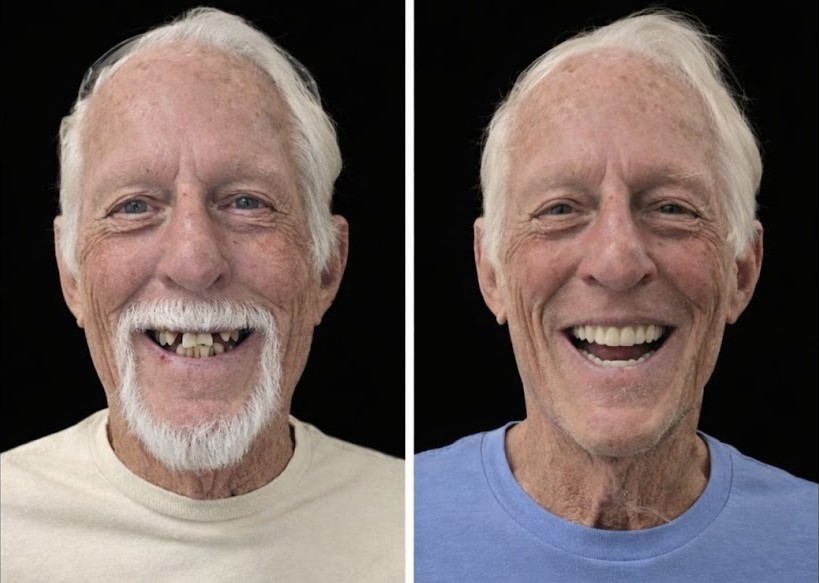
  • Confidence returns. This isn't a marketing line. We watch it happen at every follow-up.

This is the option we'd choose for ourselves.

All-on-4, All-on-6, and Custom Configurations

"All-on-4" is the most-known protocol — four implants per arch, with the back two angled to use available bone and support a fixed bridge. It's an excellent solution for many patients because it minimizes the number of implants while still providing a stable, lifelong prosthesis.

For some patients, six or more implants per arch produce a stronger long-term result, especially when bone is plentiful or bite forces are heavy. Dr. Jeff plans each case based on your CBCT scan, bone quality, bite, medical history, and goals. We won't place fewer implants than your case needs to last decades — and we won't place more than that either.

Whether your case is best treated with All-on-4, All-on-6, or a custom configuration is determined at the consultation, not by a brochure.

The Treatment Process

  1. Consultation and CBCT scan. A 3D cone-beam CT image of your jaw maps bone, anatomy, nerve and sinus position. This is where the real planning happens.
  2. Treatment plan and quote. You receive a clear written plan including the number of implants, the type of final prosthesis, the timeline, and the total cost.
  3. Surgical day. Implants are placed, and in most cases you leave the office with a fixed provisional bridge the same day. You go home with teeth.
  4. Healing. The implants integrate with your bone over three to six months. You wear the provisional during this time.
  5. Final prosthesis. Once integration is complete, we deliver your final, definitive bridge — milled from materials that match natural teeth in look and durability.

The Quiet Advantage: Bone Preservation

Most patients don't think about what happens to their jaw after they lose teeth. The bone that used to surround tooth roots starts shrinking within months. Over years, the jaw narrows, the lower face shortens, and patients develop a "sunken" appearance. Dentures accelerate this because they put pressure on the gums without stimulating the underlying bone.

Implants reverse this. Forces on each implant transmit to the surrounding bone, signaling the body to maintain it. We have patients with implants placed 15+ years ago whose bone levels look the same as the day they were placed.

Cost: Investment, Not Luxury

Full-arch restorations are the most expensive single dental procedure most patients will undergo. We won't pretend otherwise. But pricing it against a denture misses the point. A full-arch implant restoration replaces:

  • A daily struggle to eat the foods you used to enjoy
  • The discomfort of a prosthesis pressing into your gums
  • The embarrassment of a denture that slips at the wrong moment
  • The progressive loss of bone and facial structure that no denture can stop
  • The cost of remaking or relining a denture every 5-7 years
  • The cumulative quality-of-life cost of compromising on the most basic function of being alive — eating, speaking, smiling

When patients come back a year after treatment, they describe the cost in two ways: "the best money I ever spent on myself" or "I should have done this ten years ago."

We offer financing through CareCredit and Cherry. We'll give you a clear quote and several payment paths.

What Patients Tell Us a Year Later

The pattern is consistent across the patients we've treated:

  • They eat foods they'd avoided for years.
  • They smile in photos again.
  • They stop covering their mouth when they laugh.
  • They sleep better — many had been keeping a denture in 24/7 to avoid being seen without it.
  • They feel like themselves again.

Tooth replacement isn't a vanity decision. It's about restoring a daily function you can't fake your way around. Eating, speaking, and smiling without thought are not luxuries.

Full-Arch Dental Implant FAQ

Will I have teeth the day of surgery?

In most cases yes. We place a fixed provisional bridge the same day as implant surgery so you don't go home without teeth. The provisional functions and looks like the final, though we restrict harder foods during healing.

How long do full-arch implants last?

The implants themselves can last a lifetime with good care — published 10-year success rates exceed 95%. The fixed prosthesis attached to the implants typically lasts 15 to 25 years before needing replacement, depending on bite forces, materials, and hygiene.

Can I really eat anything?

After healing is complete and the final prosthesis is in place, most patients eat without restriction. The only common-sense limits are the same ones we'd give anyone with natural teeth — don't bite directly into bone, ice, or hard candy if you can avoid it.

How do I clean full-arch implants?

Daily: brush, water flosser, and a special floss threader designed for under bridges. Every six months: professional cleaning with us. We'll teach you the technique at delivery and refresh it at every recall.

Are full-arch implants better than dentures?

For function, esthetics, comfort, and bone preservation — substantially. There is no objective measure on which a denture outperforms a fixed full-arch restoration. The honest comparison is in the consultation when we look at your specific case, bone, and budget. Read our full comparison →

What if I don't have enough bone?

We can often build bone with grafting, sinus lifts, or zygomatic implants in advanced cases. CBCT imaging tells us exactly what we have to work with. Patients turned away by other offices are often candidates here.

How much do full-arch dental implants cost in Killeen?

Full-arch implant restorations vary widely based on implant count, materials, whether grafting or extractions are needed, and the type of final prosthesis. We provide a complete written quote after your consultation and CBCT scan — not a guess.

Is the surgery painful?

You're numb during placement and most patients are sedated. Post-op discomfort is typically less than patients expect — manageable with over-the-counter pain relievers for a few days. Most patients return to non-strenuous work within 2-3 days.

Ready to Replace an Arch the Right Way?

Schedule a consultation with Dr. Jeff Muszynski. We'll do a CBCT scan, walk through what's possible for your case, and give you an honest, written treatment plan.

After Implant Treatment

Review healing instructions for dental implant surgery and bone grafting before or after your appointment.